

Don’t Sign a Lease Tested This First
This matters even more when you're building your business publicly.

Turn Community Into a Marketing Strategy
But some coffee brands are taking that behavior a step further.
The Most Expensive Mistake You Can Make
Attention and purchasing behavior are different.

The problem is spending heavily before you've tested those assumptions.
You found the perfect espresso machine.
You've saved dozens of interior design references.
You've imagined the custom cups, furniture, menu boards and packaging.
Maybe you've even found the perfect location.
Opening a coffee shop is finally starting to feel real.
And this is exactly where one of the most expensive mistakes can happen:
Building the entire business before proving that customers actually want it.
It's easy to spend money creating the coffee shop you've imagined.
It's much harder to know whether the people in your neighborhood will choose it once the doors open.
Many businesses begin with a reasonable assumption:
If we create something great, people will come.
Sometimes they do.
But "great" is subjective.
Customers might love the interior but dislike the location.
They might love the coffee but think the menu is too expensive.
They may follow the brand online but rarely visit in person.
Or they might visit during the grand opening and never develop a reason to return.
The problem isn't believing in your idea.
The problem is spending heavily before you've tested those assumptions.
Coffee is incredibly visual.
Beautiful interiors photograph well.
Custom packaging looks impressive on social media.
A perfectly designed café can generate thousands of likes and saves.
But none of those things answer the question that ultimately matters:
Will enough people consistently spend money here?
Attention and purchasing behavior are different.
That's why validation should happen before the most expensive version of the business is built.
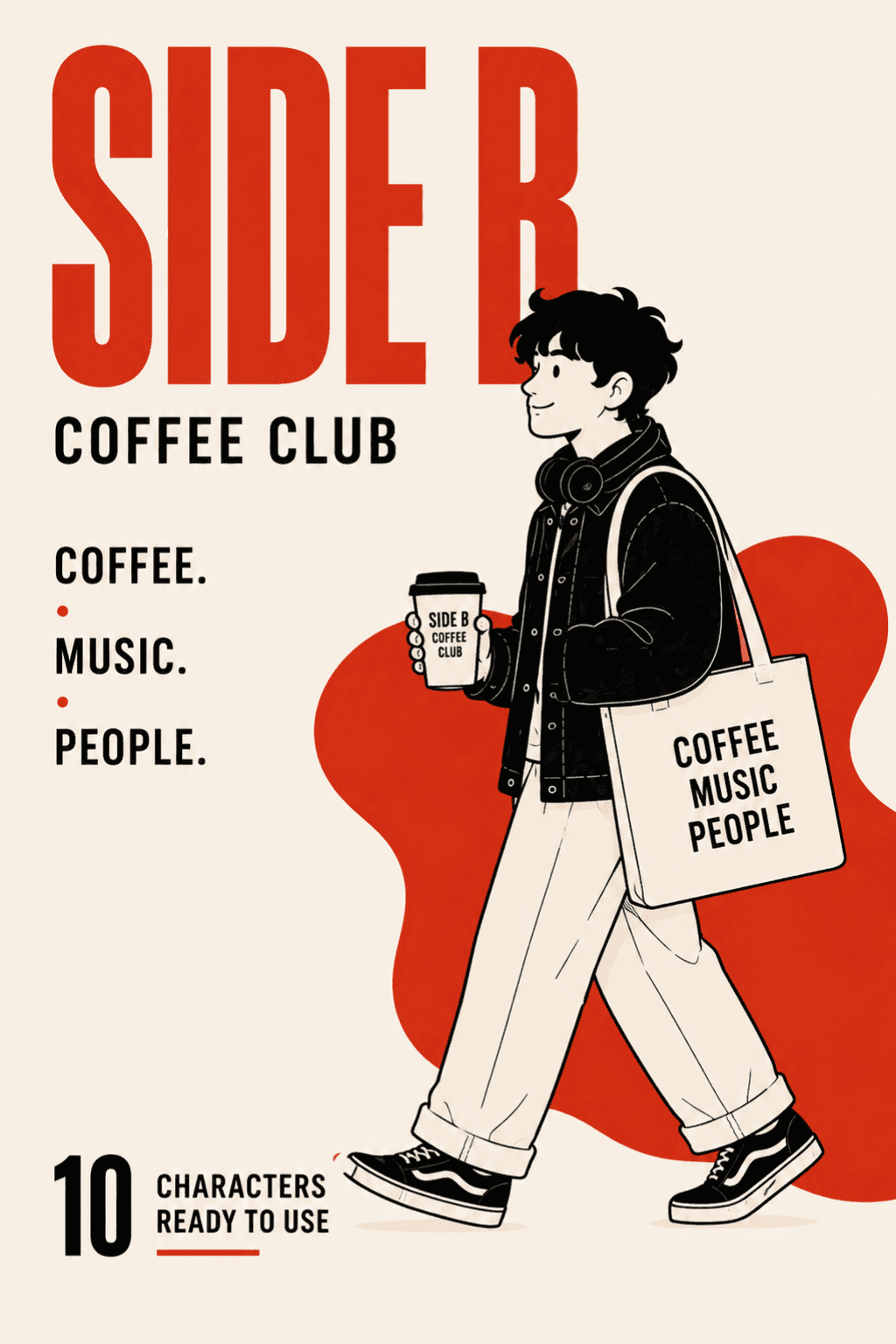
Before opening, ask:
What if people don't come?
Not because you should expect failure.
Because answering that question early can make the business stronger.
What would you want to know before investing heavily?
Will people travel for the concept?
What will they buy?
How much will they spend?
Will they return?
Will they bring friends?
Which neighborhood responds best?
Those are questions you can begin answering without owning a permanent coffee shop.
Your first version doesn't need polished interiors and thousands of dollars of equipment.
It needs customers.
Consider starting with:
A coffee pop-up
A weekend collaboration
A coffee club event
A booth at a local market
A partnership with an existing café
A coffee-and-DJ event
A temporary retail activation
The objective isn't to pretend you're already a full coffee shop.
It's to test the parts of the idea that matter.
Friends telling you they love the concept feels encouraging.
Followers commenting that they'd "definitely come" feels even better.
But neither is as useful as someone you don't know taking out their wallet.
That's the signal you're looking for.
Can the concept turn interest into a transaction?
Even a small event can begin answering that question.
If 100 people see your promotion, how many attend?
What do they purchase?
How much do they spend?
And perhaps most importantly:
Do they come back?
Testing early also gives you permission to change.
Maybe you imagined a traditional specialty café but discover that people respond more strongly to your social events.
Maybe your signature drink isn't the bestseller.
Perhaps merchandise performs unexpectedly well.
Maybe customers love the coffee-and-DJ concept but aren't interested in formal coffee tastings.
That's not failure.
That's information.
And information is considerably cheaper when you haven't already designed the entire business around the original idea.
Your business model isn't the only thing you can validate.
You can also test the identity.
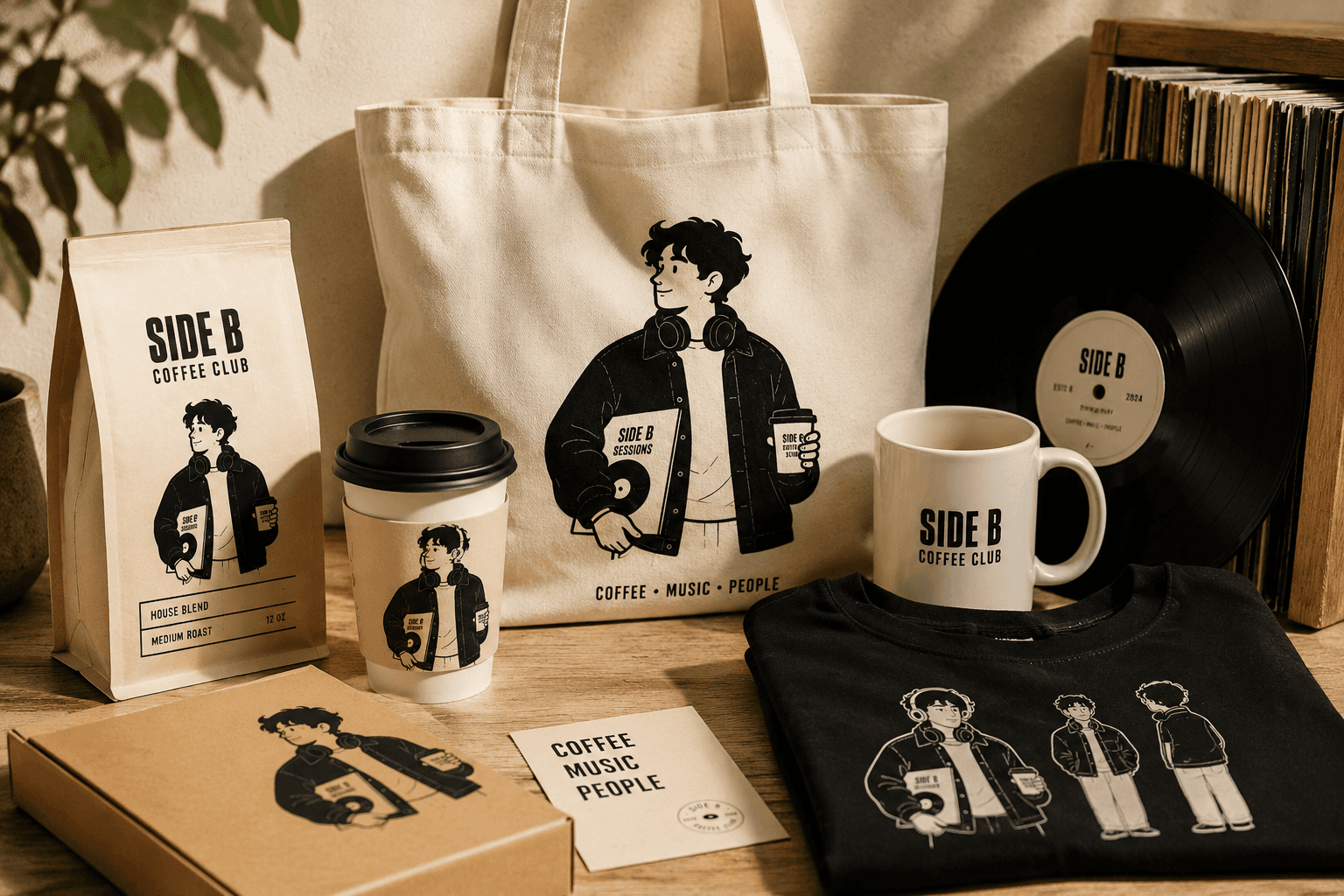
Create a small visual system:
A name.
A logo.
A character or illustration.
A poster.
A coffee cup.
A T-shirt.
Then watch what happens.
What do people photograph?
What gets shared?
What do people want to buy?
What do they remember?
A brand becomes stronger when customers begin telling you which parts resonate with them.
This is particularly important for visually attractive businesses.
A beautiful coffee concept can perform incredibly well online.
Thousands of people may save an image because they love the aesthetic.
But those people could live all over the world.
A viral image doesn't necessarily tell you whether enough people within 15 minutes of your future café will become regular customers.
Social media can validate interest.
Local experiments are much better at validating behavior.
You need both.
Imagine spending months preparing.
The lease is signed.
Construction is complete.
Equipment is installed.
Staff are hired.
Packaging has arrived.
Then you open the doors and finally discover how customers respond.
That's an expensive time to start learning.
Now imagine the opposite.
Before opening, you've already hosted six events.
Hundreds of people have attended.
You have an email list.
You've tested your drinks.
You've sold merchandise.
You've experimented with different neighborhoods.
People recognize the brand.
Some are already asking:
“When are you opening a permanent location?”
Now your grand opening isn't the beginning of the experiment.
It's the result of one.
One successful event can be misleading too.
People love new things.
Friends show up.
Curiosity creates attendance.
The stronger signal is repetition.
Can you host another event and attract people again?
Do previous customers return?
Does word of mouth bring new people?
Does your email list grow?
Does spending increase?
A community starts becoming valuable when you can bring people together repeatedly.
This may be the most surprising outcome.
What if the temporary version works extremely well?
Perhaps your coffee club events sell out.
Maybe partnerships with existing venues are profitable.
Your merchandise starts selling.
Sponsors become interested.
Customers follow your events from location to location.
Suddenly, the question changes from:
“How quickly can we open a coffee shop?”
to:
“What would a permanent coffee shop add to what we've already built?”
That's a much stronger position.
You're choosing a location because the business needs one—not because having a coffee shop was the original assumption.
This doesn't mean never taking risks.
Businesses require investment.
At some point, you may need the equipment, staff, inventory and physical location.
The goal isn't to eliminate risk.
It's to change the order.
Instead of:
Spend → Build → Launch → Learn
try:
Test → Learn → Improve → Invest
Every experiment gives you information.
And every piece of information makes the next investment slightly less dependent on hope.
The most expensive mistake before opening a coffee shop isn't necessarily choosing the wrong espresso machine or paying too much for furniture.
It's committing too much money to assumptions you could have tested first.
Before building the full version, build the smallest version.
See who shows up.
See what they buy.
See what they remember.
See whether they return.
Then build from evidence.
Because the best time to discover what customers want is before changing your life—and your bank account—to give it to them.
This matters even more when you're building your business publicly.
But some coffee brands are taking that behavior a step further.