A line at the counter looks like success.
Tables are occupied. Drinks are going out. Your social media is full of customers holding branded cups. On Saturday morning, there might even be a wait.
But there's an uncomfortable question every coffee shop owner eventually has to answer:
Is all of that activity actually making money?
A busy coffee shop and a profitable coffee shop aren't necessarily the same thing.
When rent, labour, ingredients, equipment, packaging, payment fees and dozens of smaller expenses are pulling money out of the business, selling more coffee doesn't automatically solve the problem.
Sometimes the bigger opportunity isn't getting more people through the door.
It's increasing the value of the customers already there.
Revenue Isn't the Same as Profit
It's easy to look at sales and assume the business is doing well.
But every coffee sold has costs attached to it.
There are ingredients and packaging, but there are also expenses that aren't visible in the cup:
Rent.
Payroll.
Insurance.
Utilities.
Equipment maintenance.
Software.
Marketing.
Cleaning.
Furniture.
Waste.
Professional services.
And the unexpected repair that always seems to arrive at the wrong time.
That's why increasing revenue without understanding where the money goes can create the appearance of growth without necessarily creating a healthier business.

The $5 Coffee Problem
Coffee has an interesting limitation.
There's only so much most customers are willing to pay for one drink.
You can introduce premium ingredients and specialty beverages, but eventually you hit a ceiling.
That means a café trying to grow can't necessarily rely on continuously increasing the price of coffee.
Instead, ask a different question:
What else can this customer buy?
A customer who enters intending to spend $5 might also buy:
A pastry
A bag of beans
Merchandise
A reusable cup
A ticket to an event
A limited-edition product
Suddenly, increasing revenue isn't entirely dependent on finding another customer.
You're increasing the value of the relationship you already have.
Your Space Can Make Money More Than Once
One of the most overlooked assets a coffee shop has is the space itself.
During normal operating hours, that space sells coffee.
But could it do something else?
After-hours events.
Coffee club gatherings.
Guest DJ sessions.
Creative workshops.
Networking events.
Product launches.
Private rentals.
Coffee tastings.
Local maker markets.
A café with a strong atmosphere can become a venue, not just a place where people buy drinks.
And events have another benefit: they can introduce entirely new groups of people to the business.
Give People a Reason to Come Back
A customer visiting once is useful.
A customer developing a habit around your business is considerably more valuable.
This is where community becomes important.
Imagine hosting a coffee club on the first Saturday of every month.
Eventually, customers aren't asking:
“Should we get coffee somewhere?”
They're asking:
“Are we going to the coffee club Saturday?”
That's a different relationship.
You're no longer competing solely on the quality or price of the drink.
You're creating something people schedule into their lives.
Merchandise Can Turn Customers Into Advertising
A well-designed T-shirt isn't just another item on a shelf.
Neither is a tote bag, hat or reusable cup.
When someone genuinely likes the identity of a coffee brand, merchandise allows them to participate in it.
And every time they wear or carry that product outside the café, the brand travels with them.
The key is making merchandise people would actually want even if the café's logo wasn't printed across the front.
Think less:
“Let's put our logo on a shirt.”
And more:
“What would our community genuinely want to wear?”
That's where characters, illustrations, phrases and limited-edition collaborations become interesting.
Limited Drops Can Create Urgency
Permanent merchandise doesn't always create a reason to buy today.
Limited releases can.
Imagine creating a different illustrated coffee cup for each season.
Or collaborating with a local artist on 50 shirts.
Or releasing merchandise specifically for one coffee club event.
The customer isn't simply buying another café T-shirt.
They're buying something connected to a particular moment or community.
That creates scarcity without requiring the business to carry huge amounts of inventory.
Sell the Coffee People Already Love at Home
If customers regularly order your coffee in-store, some may want to drink it at home.
That opens another potential revenue stream:
Retail coffee beans.
A café can work with a roasting partner, offer its house blend or create limited releases connected to events and collaborations.
The interesting part is what happens afterward.
The customer who normally gives you money only when physically visiting your café can now purchase from you outside the café as well.
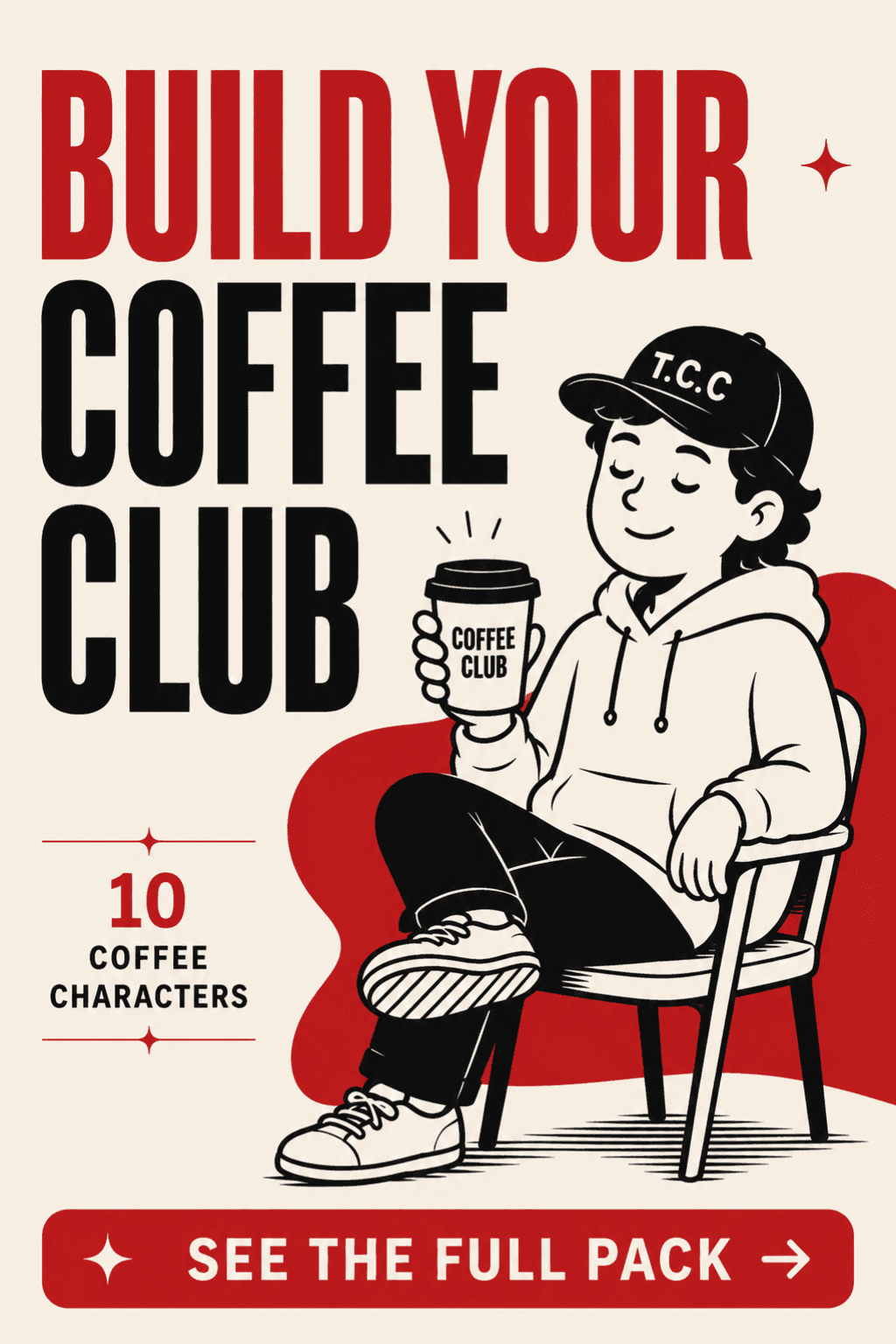
Events Can Create Multiple Revenue Streams at Once
Consider a Saturday coffee club event.
Instead of making money from coffee alone, the event could potentially include:
Coffee sales
Ticket sales
Merchandise
Vendor fees
Brand sponsorships
Retail beans
Food collaborations
Not every event needs every revenue stream.
In fact, trying to monetize everything at once can ruin the experience.
But the important idea is that a coffee business doesn't necessarily have to depend on one transaction.
Sponsorships Become More Interesting When You Have a Community
Brands don't necessarily sponsor coffee.
They sponsor access to people.
If you've built a recognizable local community, businesses that want to reach that audience may eventually want to participate.
That could include:
Food brands
Beverage companies
Clothing brands
Automotive brands
Local businesses
Fitness companies
Lifestyle products
A coffee shop with 50 regular customers is one thing.
A coffee brand capable of bringing 200 people together around an event is something different.
The community itself starts becoming an asset.
Don't Confuse Followers With Customers
A large social following can look impressive.
But followers don't pay rent.
Customers do.
A better question than:
“How many followers do we have?”
might be:
“How many people can we reach directly who have already bought something from us?”
That's why building an email list or membership database matters.
Your audience becomes more valuable when you can communicate with them repeatedly rather than hoping an algorithm shows them your next post.
Track What Actually Makes Money
Before adding ten new revenue streams, measure the ones you already have.
Which drinks have the strongest margins?
Which products sell together?
Does merchandise move?
Do events bring customers back afterward?
Are people buying beans?
Which events generate repeat attendance?
Which promotions create revenue rather than just engagement?
Sometimes the answer isn't adding more.
It's discovering which part of the business deserves more attention.
The Goal Isn't to Sell Everything
A coffee shop doesn't need to become a clothing company, event venue, subscription business and retail store simultaneously.
The goal is to identify opportunities that naturally fit the community you've already built.
For one café, that might be retail beans.
For another, events might become a major part of the business.
Another might develop a merchandise following.
And another may discover that its strongest opportunity is private events or collaborations.
The right additional revenue stream should strengthen the brand rather than distract from it.
If your coffee shop is busy but the numbers still feel tight, getting even busier isn't necessarily the only answer.
Look at what you've already built.
You may have:
A space.
An audience.
A brand.
A community.
A product people already enjoy.
The opportunity may be finding additional ways for those assets to create value.
Because sometimes the next stage of growth isn't about finding more customers.
It's about building a better business around the customers you already have.


